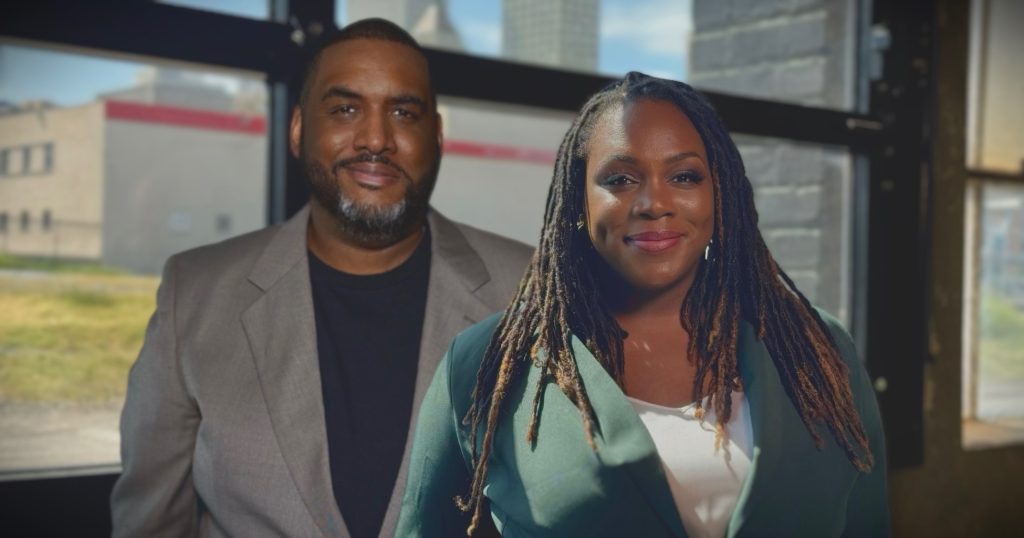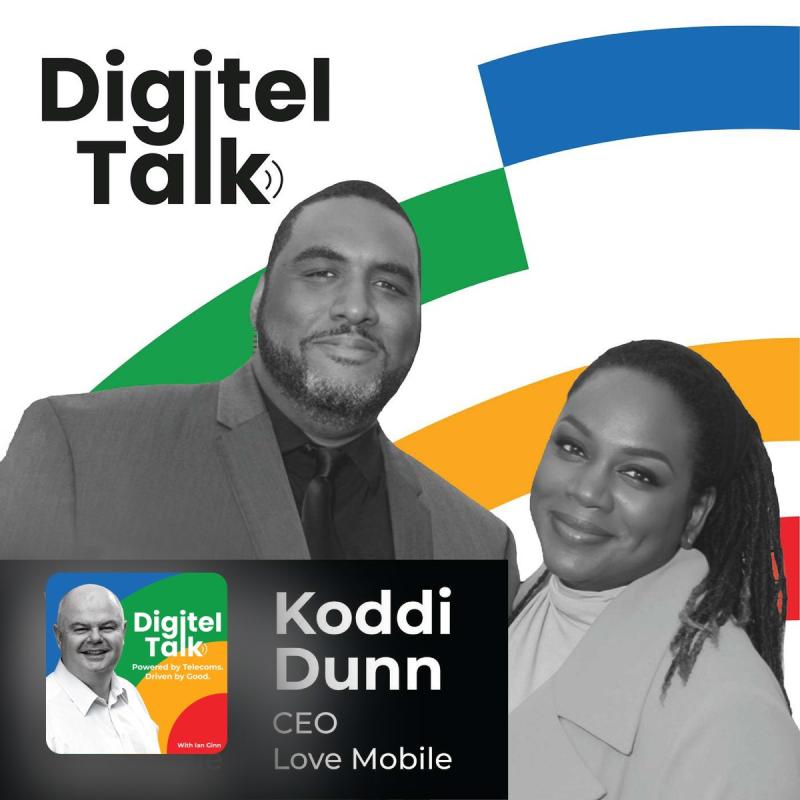
Love Mobile, The Cell Phone Company That Gives Back®, was featured on Digitel Talk, the global telecom podcast hosted by Ian Ginn that reaches listeners in roughly 100 countries. In the episode “How Love Mobile Disrupts Telecom by Giving Back,” co-founders Koddi Dunn (CEO) and Wade Dunn Jr. (COO) explained how an idea born at their kitchen table became a wireless company engineered, from the foundation up, to fund the work of local nonprofits.
You can listen to the full conversation on Digitel Talk on Spotify.
The single number at the heart of the interview is worth sitting with: a thousand subscribers in the Give Back Model™ can generate up to $120,000 a year for a nonprofit, and in meals that can equal almost half a million meals for a community.
Love Mobile is a mission-driven prepaid wireless provider headquartered in Tulsa, Oklahoma, founded by life and business partners Koddi and Wade Dunn. It offers nationwide wireless plans built on a proprietary framework called the Give Back Model™. Every time a subscriber pays their bill, every bill, every month, Love Mobile gives back in a hyper-local way to nonprofits across four pillars: Education, Environment, Community, and Animal Welfare.
As Koddi put it on the show, giving back is “baked into the foundation and framework” of the company. This is not corporate philanthropy bolted on after the fact. It is the reason the company exists.
Love Mobile did not come out of the telecom industry. It came out of a conversation between two parents at their kitchen table. Wade and Koddi have seven children, and as those kids began leaving for college out of state, the couple started thinking beyond the impact they had been making in their own community. The question they kept returning to was how to make giving back automatic.
The breakthrough was reframing generosity as a utility. As Koddi recalled the moment: Wade asked, “Well, what if it was a utility?” Because everyone pays utilities. They did not have access to the power grid or the water systems, but, as Wade pointed out, “everybody’s got a cell phone.”
That reframing is the whole company in one sentence. Wade summarized the philosophy this way:
“We didn’t start the company and decide to give back afterwards. We literally decided to give back, so we started the company.”
A member of the general public can go to getlovemobile.com, pick a plan, and become a subscriber on any of the three major U.S. networks (Love Mobile refers to them only as blue, pink, and red, and customers can even run all three on one device). In that sense, Love Mobile operates like a traditional MVNO.
What makes it different is the nonprofit partner layer. Qualifying nonprofits receive a unique partner referral link at no cost. For every subscriber who joins through that link, Love Mobile gives back to the nonprofit automatically and continually, month after month, for as long as that subscriber stays.
As Wade explained, that recurring structure is what sets it apart from conventional fundraising. A typical fundraiser produces a one-time check and then the relationship goes quiet. Love Mobile is built to support a nonprofit on an ongoing basis from revenue the subscriber was already going to spend on a phone bill.
One of the most powerful moments in the interview was Wade and Koddi’s insistence on measuring impact, not just dollar amounts. Nonprofits, Wade noted, know how to turn one dollar into the equivalent of ten. A figure that sounds small to an individual household can translate into hundreds of meals for a community.
They shared the example of an Oklahoma nonprofit partner that operates custom-built trailers serving the unhoused. The trailers include showers, a laundromat, barber services, and space for caseworkers helping people find housing. The organization travels to two major Oklahoma cities to reach people who have nowhere else to wash.
The math stopped the conversation cold: roughly every 30 subscriber accounts can equal about 1,000 loads of clean laundry. And as Wade pointed out, the stakes are higher than most people realize. He noted that the number one cause of death among the unhoused is not violence or accidental overdose, it is poor hygiene, which makes free access to showers and clean clothes genuinely life-saving.
A key point Wade made on air: Love Mobile is not charging more to give back. Plans start as low as $15 a month, and even that entry plan includes features the big carriers reserve for premium tiers, such as roaming to Canada and Mexico and free international calling to 80 countries.
“We’re trying to be in a space where everybody wins. The customer wins and the nonprofit wins. And we’re just the middleman, connecting the two pieces.”
The average American pays well over $1,000 a year for wireless service. Love Mobile’s argument is simple: you are paying that anyway, so let the money you already spend bring resources into your own community.
Wade and Koddi described their build philosophy as “version one, version ten.” Many people, Wade explained, are paralyzed by the perfect version ten idea and so they never ship version one. Love Mobile chose to launch the working version now and build toward the full vision over time. On the roadmap for future versions: impact dashboards that let nonprofits and subscribers log in and see quantified, real-world results in real time.
This same patience shaped the company’s entry into telecom. As Wade described it, overnight success is a myth, “like a seed in the ground that is growing beneath the ground before it breaks the surface.” Love Mobile spent roughly five years researching, attending conferences, building relationships, and bringing marketing value to smaller retailers before it ever launched, eventually going live on all three networks.
The conversation also turned personal. As a mother of seven, Koddi spoke about boundaries, stillness, and mental health as a genuine priority, not a buzzword. She described one of Love Mobile’s plans, the Love Line, a low-data line she uses to disconnect. Only three people have the number, she keeps it off Wi-Fi, and she even assigned it the area code of her favorite vacation spot so that switching to it feels like leaving town.
“Stillness is a superpower.” Her point: solving a problem, even a personal one, is just answering a question, and Love Mobile treats every problem that way.
Love Mobile maps its four pillars to several UN Sustainable Development Goals, including SDG 1 (No Poverty), SDG 4 (Quality Education), and SDG 10 (Reduced Inequalities). Wade illustrated this with two nonprofit partners:
Girls Inc. (specifically Girls Inc. of Greater Atlanta) does direct work with young girls around economic empowerment, STEM access, and leadership development. The organization, now marking its 50th anniversary, traces its origins to a tragedy in the 1970s and a community’s determination that its girls deserved a safe place to learn and grow.
1256 Movement, based in Oklahoma, identifies homes owned by families in poverty whose properties have lost value and who cannot secure loans for critical repairs. The nonprofit covers the cost of repairs, up to a meaningful amount, with nothing asked in return, restoring dignity rooted in a history that stretches back more than a century.
When Ian invited the founders to give a shout-out, Koddi chose Girls Inc., and revealed why it is so personal. The little girl whose death helped start the organization was from Koddi’s hometown. Almost 30 years later, Koddi herself became a Girls Club of America kid. The confidence and sense of self-worth that program poured into her as a ten-year-old, she said, helped shape the woman who now co-owns a wireless company. In March, Girls Inc. featured her as an alumna for Women’s History Month.
Wade added Girl Talk to the shout-out, framing both organizations as engines that empower the next generation of women leaders to one day “take the baton and run the next lap of the race.”
Asked what gets them out of bed, both founders landed on the same two words: legacy and impact. As Koddi framed it, you may never know the name of the person who created the computer you use or the lightbulb in your home, but you live inside their impact every day. Love Mobile is built on the conviction that you do not have to be famous to leave the world better than you found it.
Wade’s closing reflection was about something larger than telecom altogether: a wish that humanity could simply share more, that there is enough on this earth for everyone to have enough. That is, in the end, why the company is called Love.
The full Digitel Talk interview, “How Love Mobile Disrupts Telecom by Giving Back,” is available now on Spotify and wherever you get your podcasts.
To explore plans and see how your phone bill can support causes in your own community, visit https://getlovemobile.com. For customer support, call 888-271-5683.
What is Love Mobile? Love Mobile is a prepaid wireless provider, The Cell Phone Company That Gives Back®, headquartered in Tulsa, Oklahoma. It offers nationwide phone plans built on the Give Back Model™, which directs a portion of every subscriber’s bill to local nonprofits across four pillars: Education, Environment, Community, and Animal Welfare.
How much can Love Mobile give back to a nonprofit? A thousand subscribers in the Give Back Model™ can generate up to $120,000 a year for a nonprofit. Measured in impact, that can equal almost half a million meals for a community.
How much do Love Mobile plans cost? Plans start as low as $15 a month, and even the entry plan includes features like roaming to Canada and Mexico and free international calling to 80 countries. Love Mobile does not charge more in order to give back.
Who founded Love Mobile? Love Mobile was co-founded by life and business partners Koddi Dunn (CEO) and Wade Dunn Jr. (COO), who started the company from a kitchen table conversation rooted in the belief that commerce and community belong together.
How does a nonprofit partner with Love Mobile? Qualifying nonprofits receive a unique partner referral link at no cost. For every subscriber who joins through that link, Love Mobile gives back automatically and continually, month after month, for as long as the subscriber stays.
Where can I hear the Digitel Talk episode about Love Mobile? The episode, “How Love Mobile Disrupts Telecom by Giving Back,” hosted by Ian Ginn, is available on Digitel Talk on Spotify.
Copyright © 2026 Love Mobile Incorporated.
All rights reserved.